
Thou Art That Girl: Medieval Y2k Is So Back
Long, long ago bodies were armoured with chain mail and the nobility were adorned with hennins. The medieval period passed centuries ago— so why does it feel so in season now? There’s a growing interest in this fantasy-driven nostalgia — a longing that’s difficult to ignore when it's being charged through fashion lines and social media.
On June 20th, 2025, @saturnsreturnz on X reshared the intro of Pink Pantheress’ Close To You music video, stating “this is so medieval y2k coded”. Naturally this divided the internet. On one hand users bitterly argued that ‘y2k’ and ‘medieval’ cannot coexist; someone was simply “throwing words together”. However other users came to its defence, armed with gifs from Ella Enchanted or A Knight’s Tale in support. As the on-the-nose name suggests, ‘medieval y2k’ is a subculture distinguished by films that merge 2000s pop-culture with borrowed medieval aesthetics and fairytale settings. Since the initial post, social media has brimmed with Polyvore outfits, film and music recommendations and mood boards all yearning to bring this aesthetic back.
Beyond being a niche style or film genre, this love of the modern-medieval opens a conversation on the habitual way society translates emotion into fashion — specifically how in times of high cultural anxiety we flock to worlds of great fantasy. In fact, the allure of the medieval aesthetic is only repeating itself; a cultural symptom of our discomfort with the present, re-diagnosed throughout history. A nausea whose remedy is medievalism. It’s a form of storytelling that allows us to flee the chaotic present for a past made palatable by its sheer whimsy. An escape where fantasy elements soften the perils of everyday life.
What is medievalism?
Medievalism is defined as an ‘enthusiasm for or imitation of the arts and customs of Europe during the Middle Ages’. It’s worth clarifying that this is not an accurate study of the period.
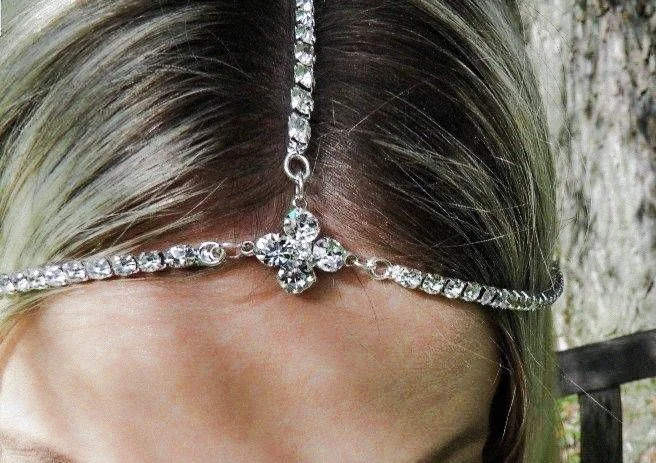
Unbothered with what years necklines were squared and whether they differed from when sleeves were belled. Accuracy was never the appeal. Alternatively, medievalism borrows a dramatically stylised version of the past — mythicised with the chivalry of knights saving damsels, dragon-guarded castles, fairies and forbidden forests — neatly deserting the feudal oppression, poverty and disease that defined it just as much. One might imagine that it is quite tricky to romanticise that.
The medieval revival grew popular throughout the 19th century, closely reflected in its art movements. The Pre-Raphaelites — a brotherhood of English artists and authors — criticised the increasing unpredictability of a society undergoing an industrial restructure. They renewed an older interest in Arthurian tales and medieval romanticisation during a time where precision and classical antiquity otherwise dominated. Notably John Everett Millais' Ophelia was one of the most adored artworks from this movement.Here grew the idea that the past was romantic and desirable, crediting it an enchantment that the fast-moving present could only strangle. Like the Y2K medievalists that ensued, the Pre-Raphaelites were disinterested in accuracy. They rewrote the allure of the Middle Ages, using it as a beautiful artistic opposition to modernity.
The mid-century revival
Although the Pre-Raphaelites helped shape modern medievalism, their influence is blurred by the century that separates us. Alternatively, it was the revival during the the 1960s and '70s that brought medieval imagery back into everyday culture. Fleeing an era permeated with the desolation of the Vietnam War and whirling social change (1960s Mod fashion and the Space Age), the ’60s and ’70s instinctively reached back toward medieval influence. Motifs included cloaks and tunics, intricate embroidery, folk-infused ballads and a resurgence of Arthurian imagery.
In escaping cultural anxieties, people embraced naturalistic paths and countercultural movements advocating for peace, community and connectedness with nature. Even psychedelia only fuelled interest in medieval fantasy as these ‘trips’ often conjured hallucinatory, fairytale realities. The era offered up icons such as Stevie Nicks styling reminiscent crushed velvet, bell sleeves and celestial emblems. Among music and medieval-set films, fantasy literature returned to shelves, all of which contributed to broadcasting medievalism.
“Are we in the mid-sixties or the Middle Ages?”
Its intense presence — now everywhere — was undeniable. The revival also gave rise to the Renaissance fair — an outdoor festival complete with medieval-inspired costumes, vendors and music. Medievalism slipped into mainstream fashion, A 1967 New York Times spread by Harriet Cain plainly wondered “Are we in the mid-sixties or the Middle Ages?”. A question posed beside models dressed in what she dubbed the “knighthood-in-flower look…for modern women who dare to be one-up on fashion”.
A very whimsy ‘90s
The late 1990s matured medievalism, soiling the aesthetic with gothic undertones, as influenced by the popularity of grunge music and witchcraft. This style — now known as ‘whimsigoth’ — composes fashion that draws inspiration from magic-infused media: Charmed, Sabrina the Teenage Witch, Buffy the Vampire Slayer. The late ‘90s also grew a healthy appetite for modern Shakespeare retellings. 10 Things I Hate About You (1999) spins The Taming of the Shrew into a high school rom-com, even personifying its medieval influence in the character Mandella — best friend to the protagonist — who is costumed in blouses, braids, red velvet and accessorised with snoods.
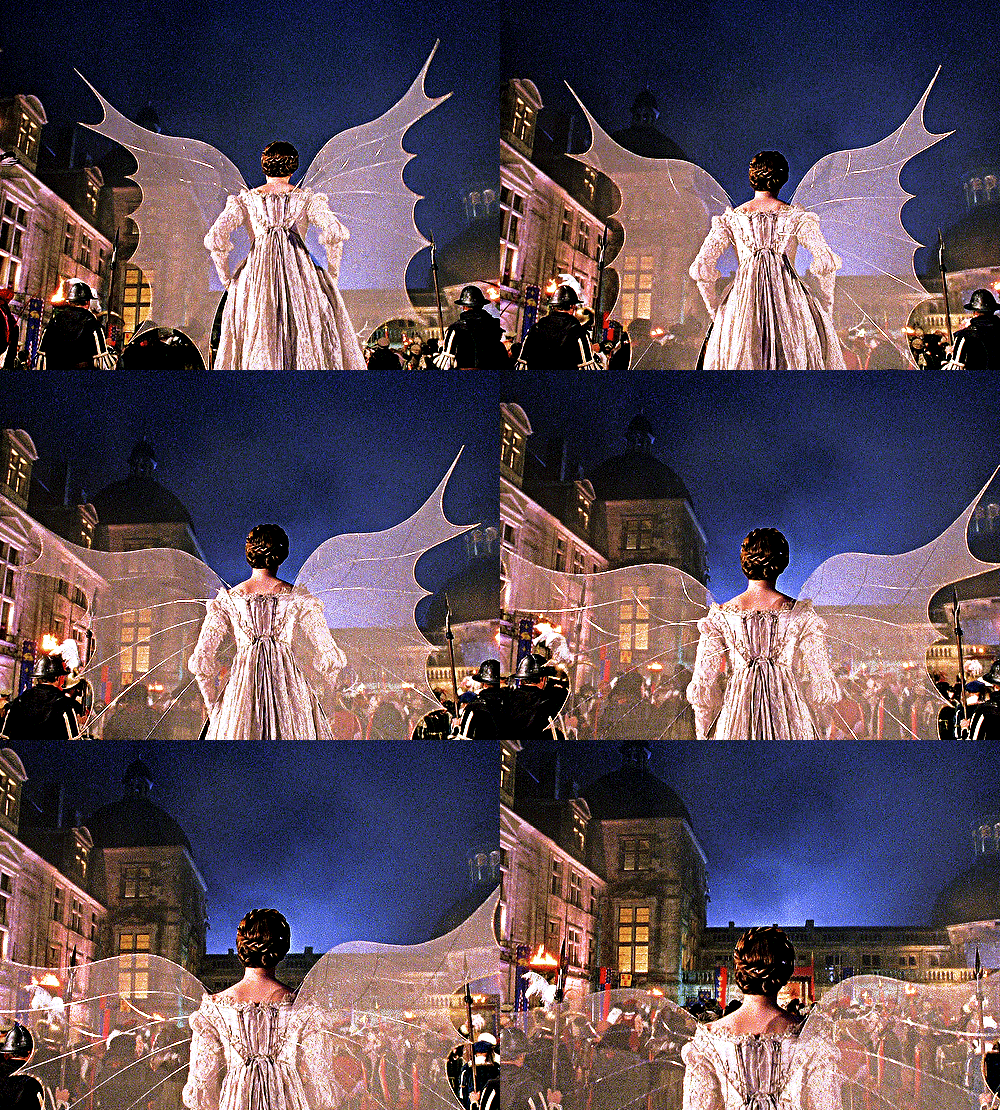
Ever After (1998)
The ‘90s also offered up a personal favourite fairytale rendition: Ever After (1998). Drew Barrymore plays Daniella, a witty and gritty Cinderella-adjacent heroine who combats class and feminist oppression in 16th century France. Leonardo Da Vinci even assumes the place of a fairy-godmother figure. Though he wields a paintbrush over a silver wand, and the film falls into heavier subject matter than most princess tales, it still succeeds at enchanting the Middle Ages. As Daniella enters the ball in an iridescent ensemble paired with glass slippers, face-glitter, and fairy wings, it feels impossible to deny a sense of magic.
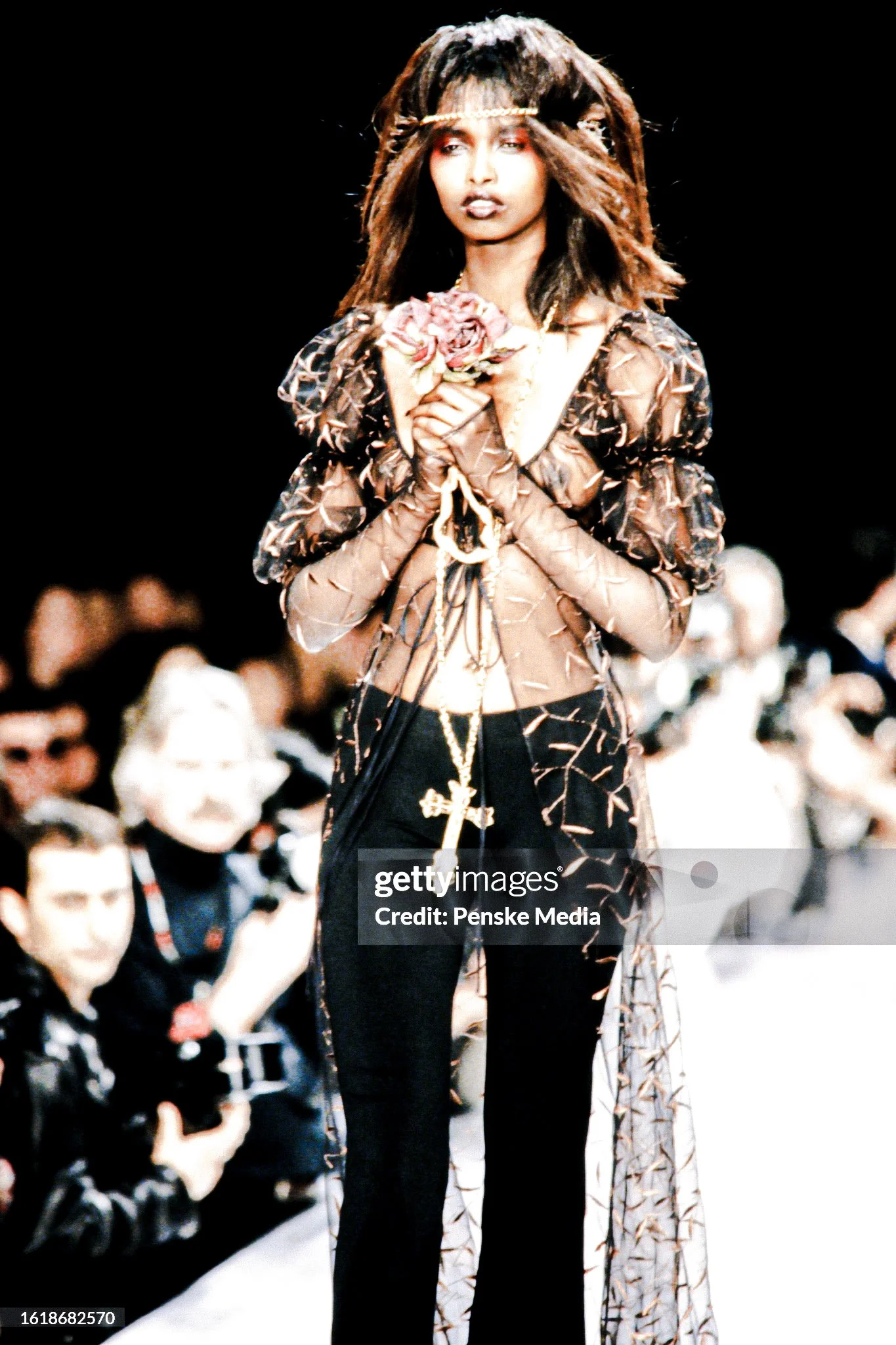
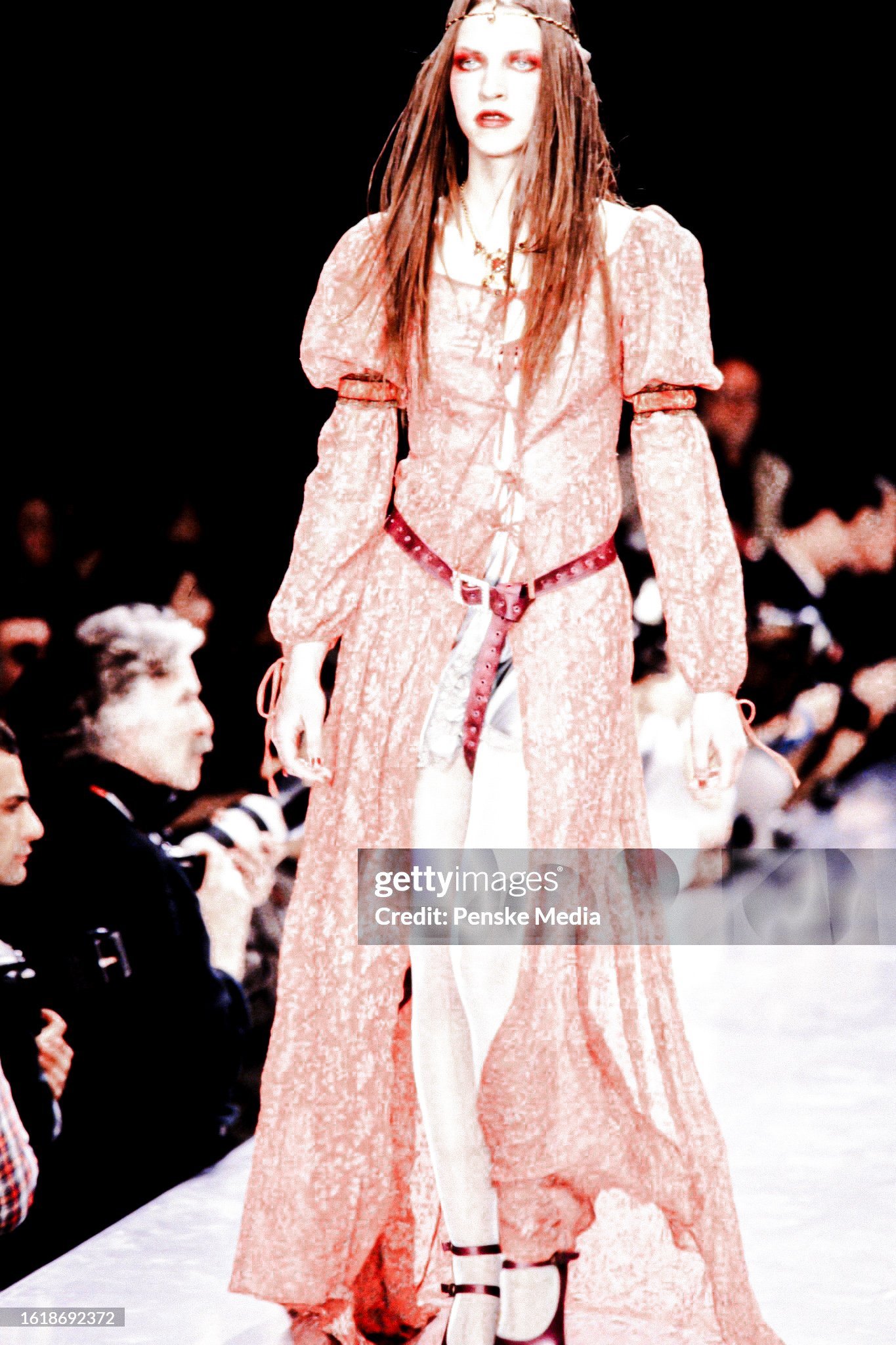
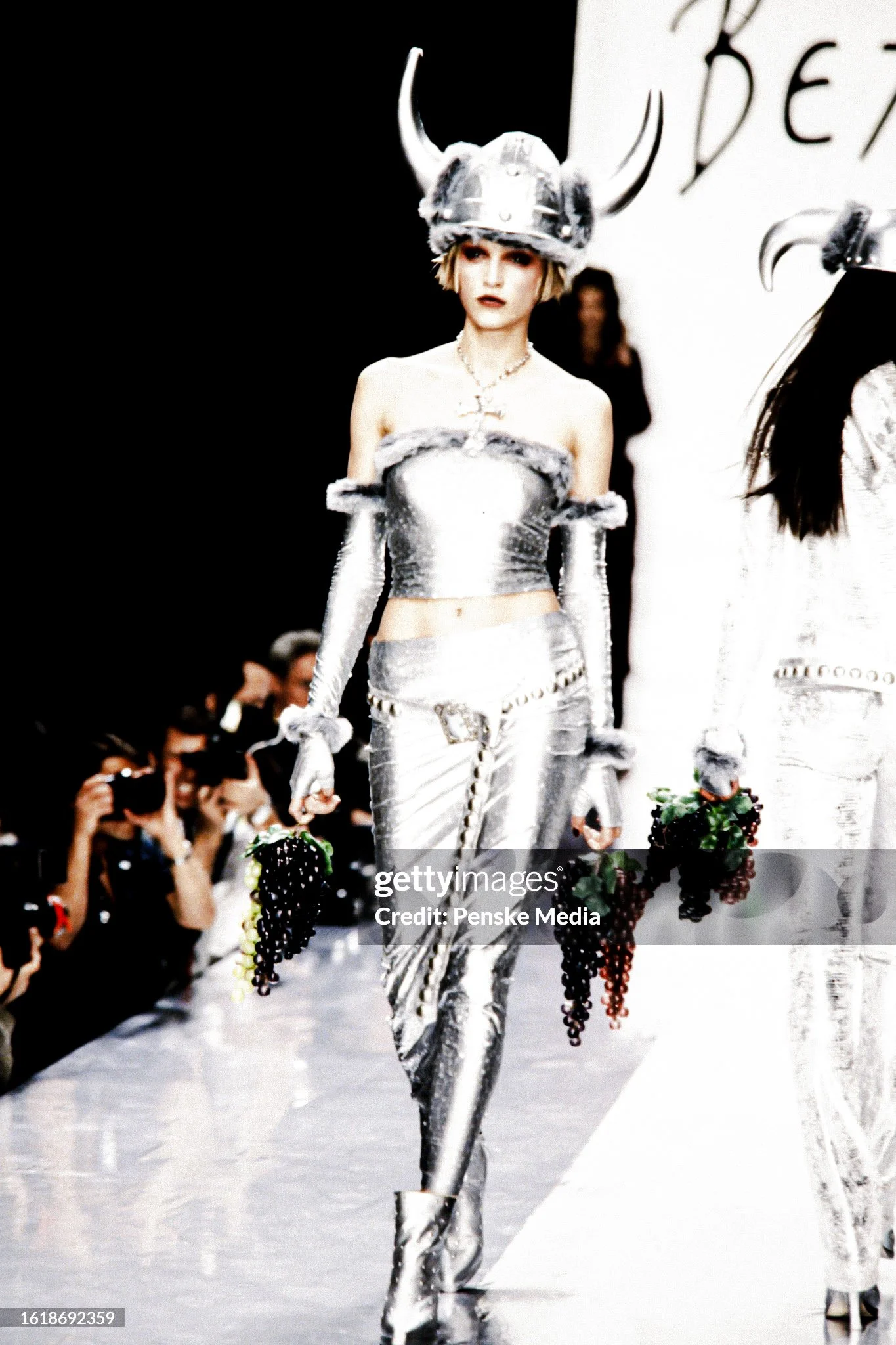
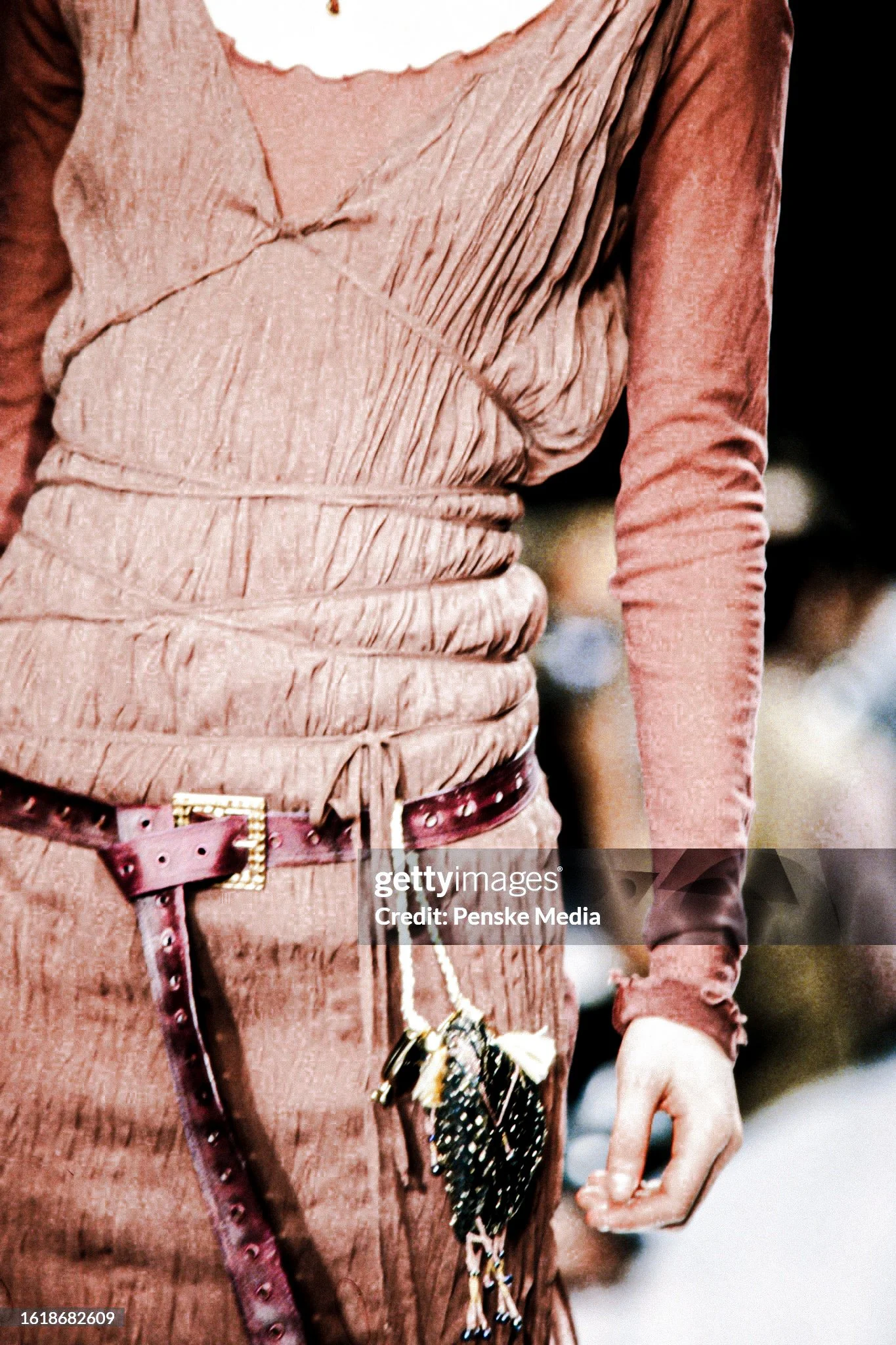
Betsey Johnson Fall (1997)
Beyond film sets, designers too played fairytale-dress up by modelling medieval influence down the runway. Possibly the most stunning encapsulation of this revival is Betsey Johnson’s Fall/Winter 1997 collection. It’s a line that lets doll-like femininity fall into the hands of medieval drama. Juliet sleeves, tiaras and velvet are layered among belts, tinkered armour and beaded pouches.
“Betsey’s Fall 1997 RTW collection was the ultimate class in punk meets gothic fairytale.”
Y2k and film nostalgia
The third time’s a charm. The 2000s again re-defined medieval influence, this time against a context saturated with it girls, frosted lips and compact tech. Though knotty and chaotic, this internet-charged era provided the grounds to produce some of the most unique cult-classicswhere scripts could be deliberately silly.
This medievalism we feel nostalgic toward today was born from that very contradiction. Filmmakers of the early 2000s turned to the Middle Ages in storytelling for play and escape from an uncontrollably expanding digital landscape. As the Twitter discourse illustrated, the fun of y2k medievalism lies in its absolute self-awareness, acknowledging the incompatibility between the fabled past and flashy 2000s. In this genre the princesses reject passivity, soundtracks swap folk-ballads for Smash Mouth and ‘thees’ and ‘thous’ are exchanged for a distinctly 2000s vernacular.
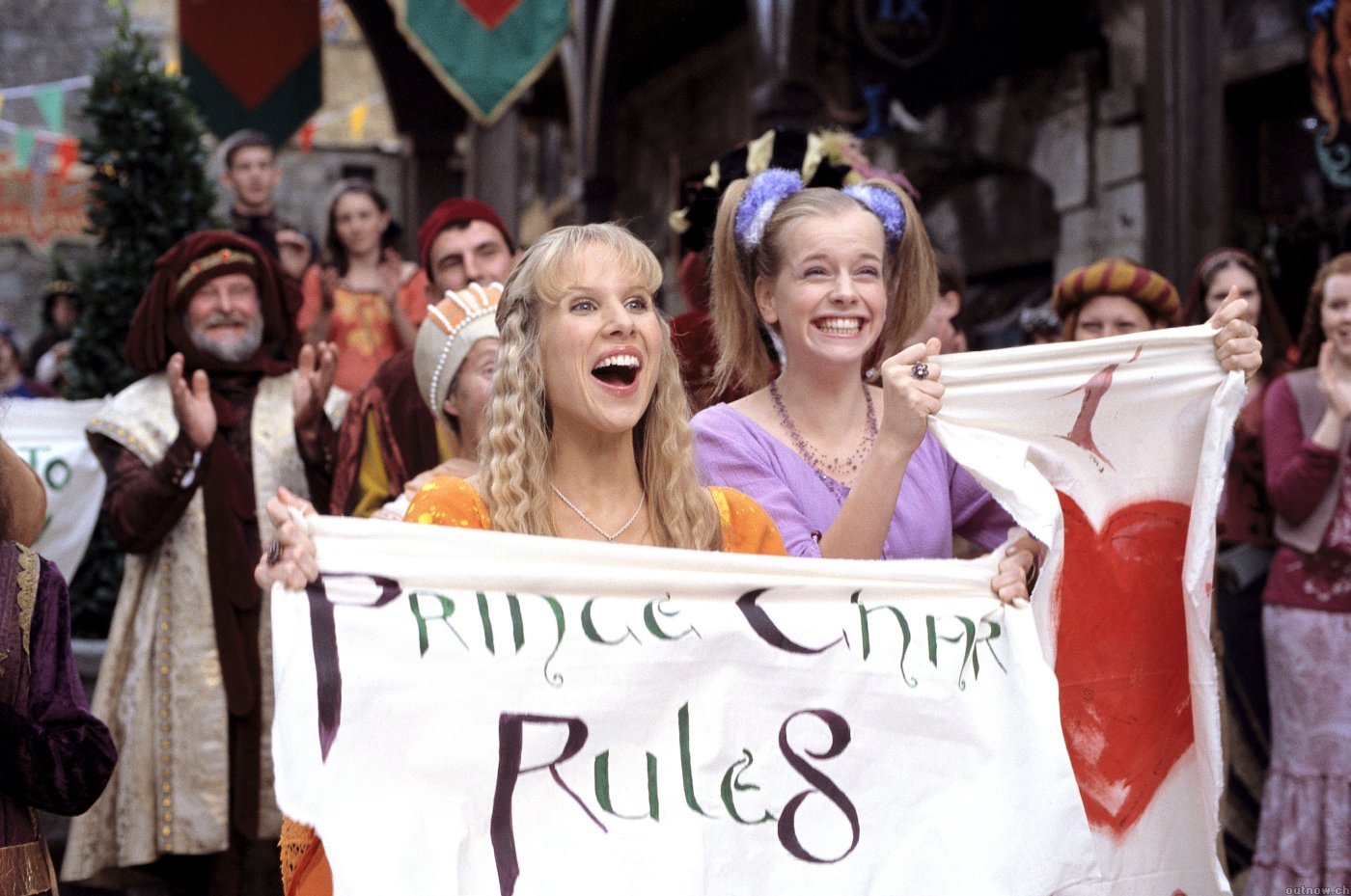
Ella Enchanted (2004)
Castles and cobblestones might still be the stage, but the 2000s ensured the acts were entirely different. Ella Enchanted (2004) champions this beloved aesthetic — a whimsical medieval story that smuggles y2k sarcasm between the script. Evil stepsister Hattie is no boring maiden longing to romance Prince Charming; instead she parodies early 2000s fan-culture as president of the Prince Char fan club. She abandons windowside daydreaming for drooling as she chases him across paddocks and ornaments herself with homemade badges and ‘I Heart’ tees.This era of film injected drops of camp into medievalism and sprinkled historical dress with a touch of y2k fairy dust — creating the cultural hybrid of anachronistic fantasy that is so idolised today.
Where Betsy Johnson’s line revelled in the campy theatrics of knights and princesses, Anna Sui’s 2000 Spring ready-to-wear offered a quieter interpretation of medievalism but equally as bewitching. For those inspired to embody this revival in everyday dress, consider this entire line my mood board.
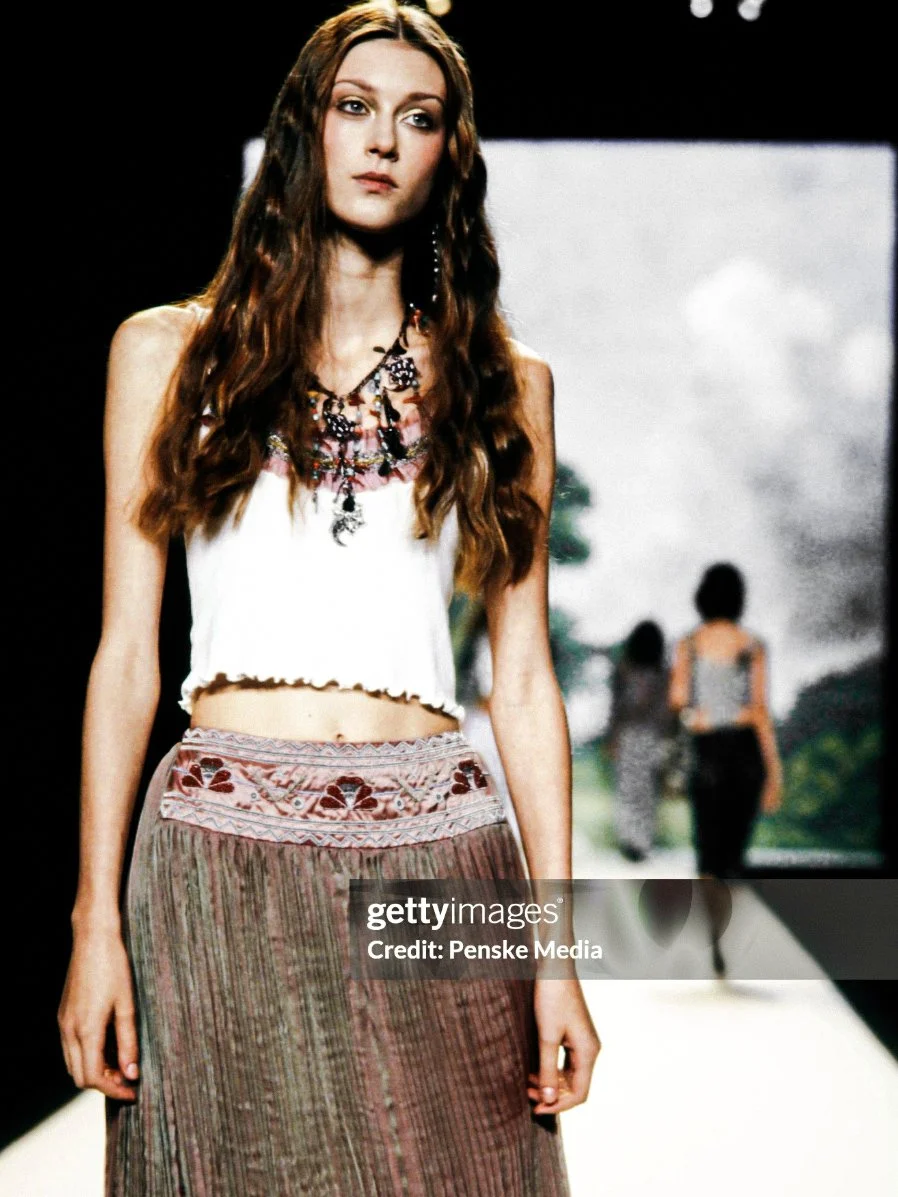
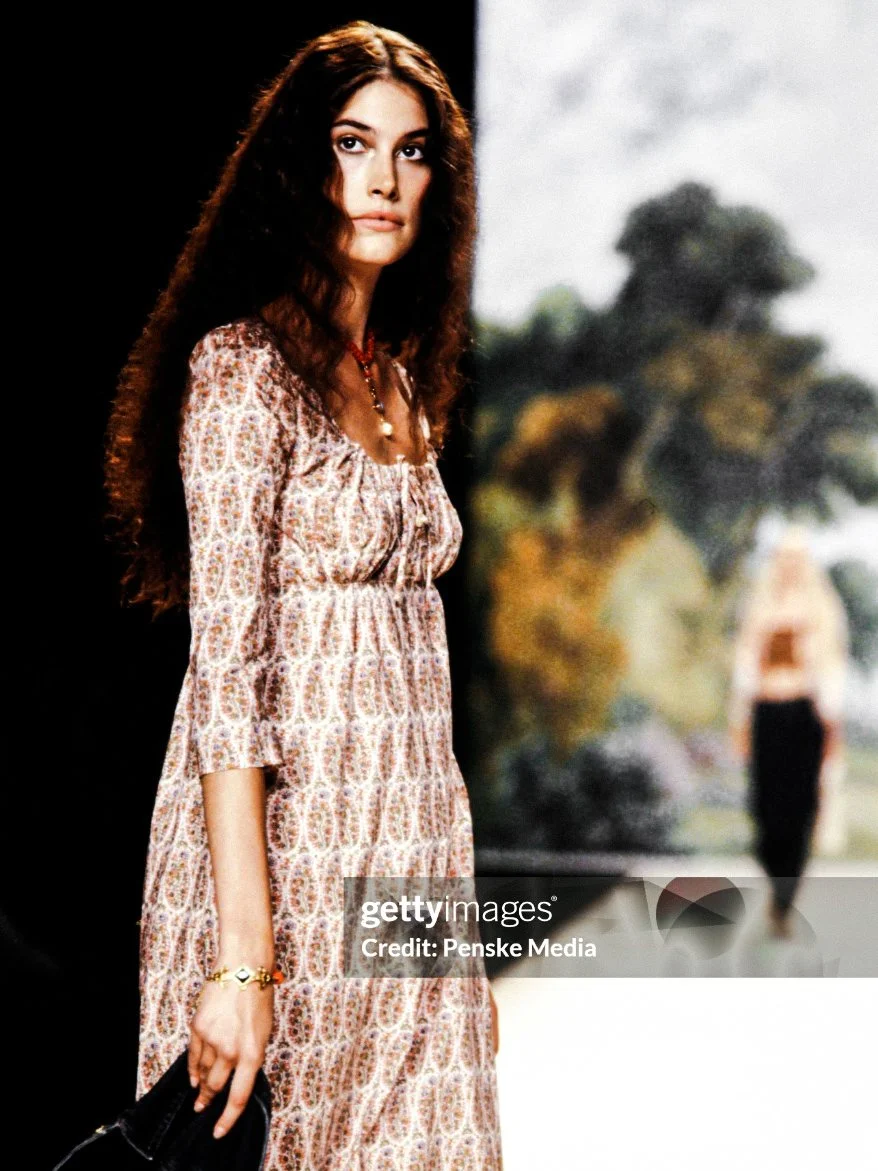
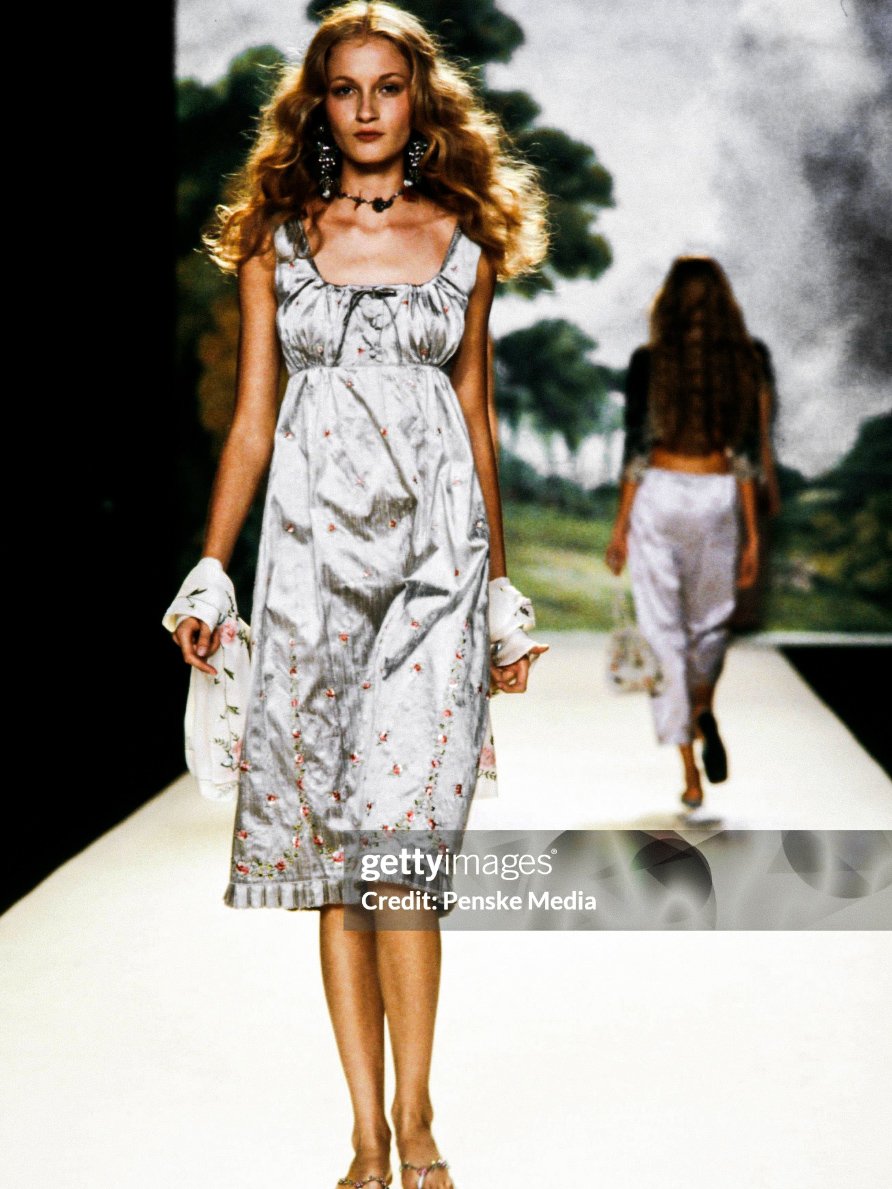
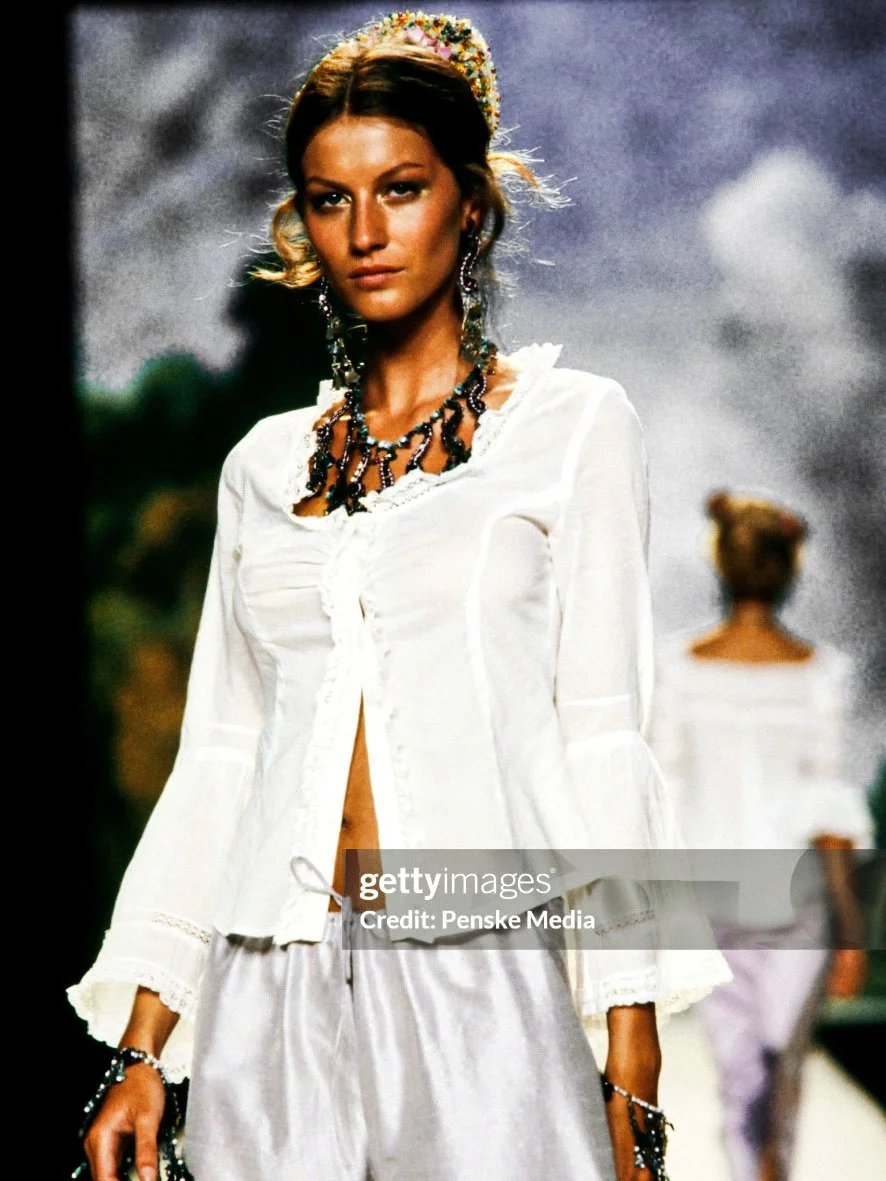
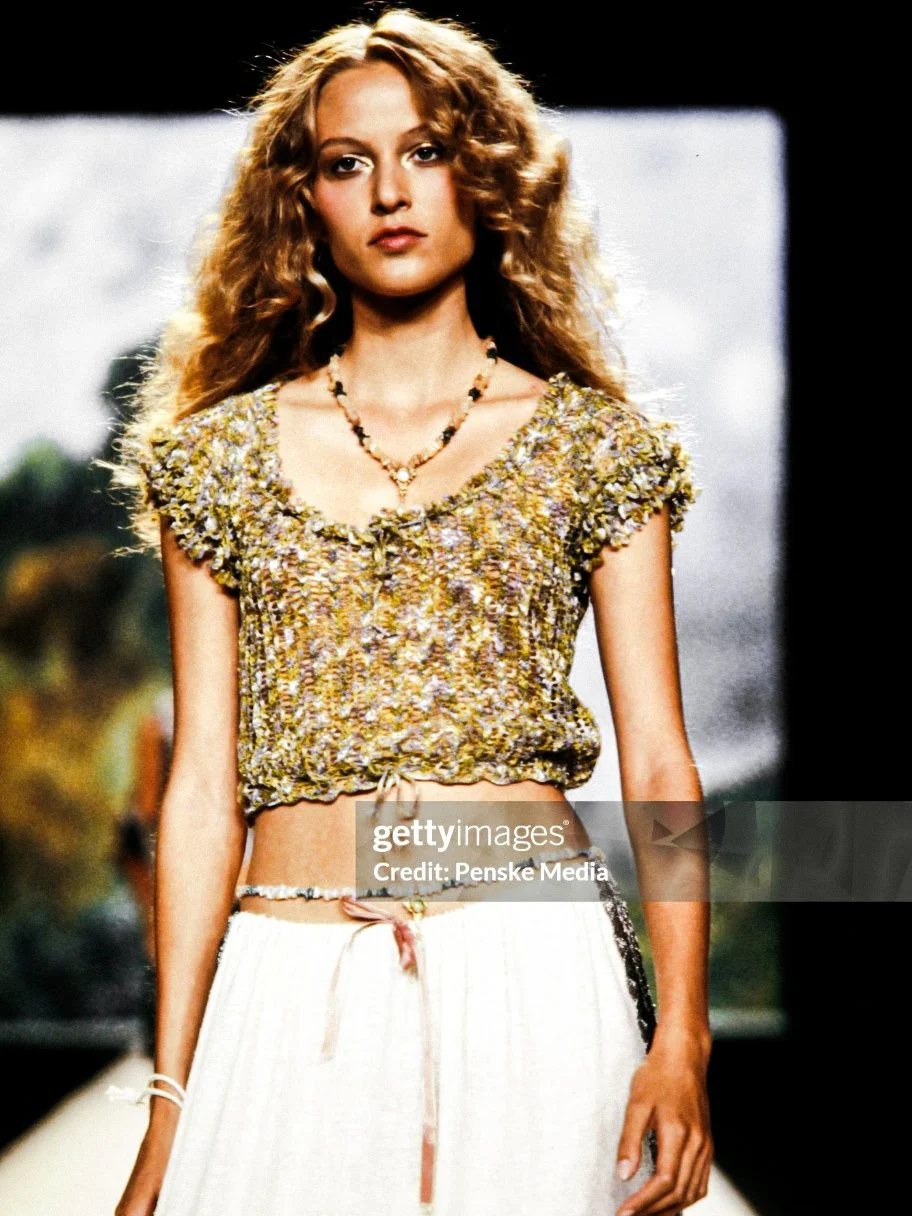
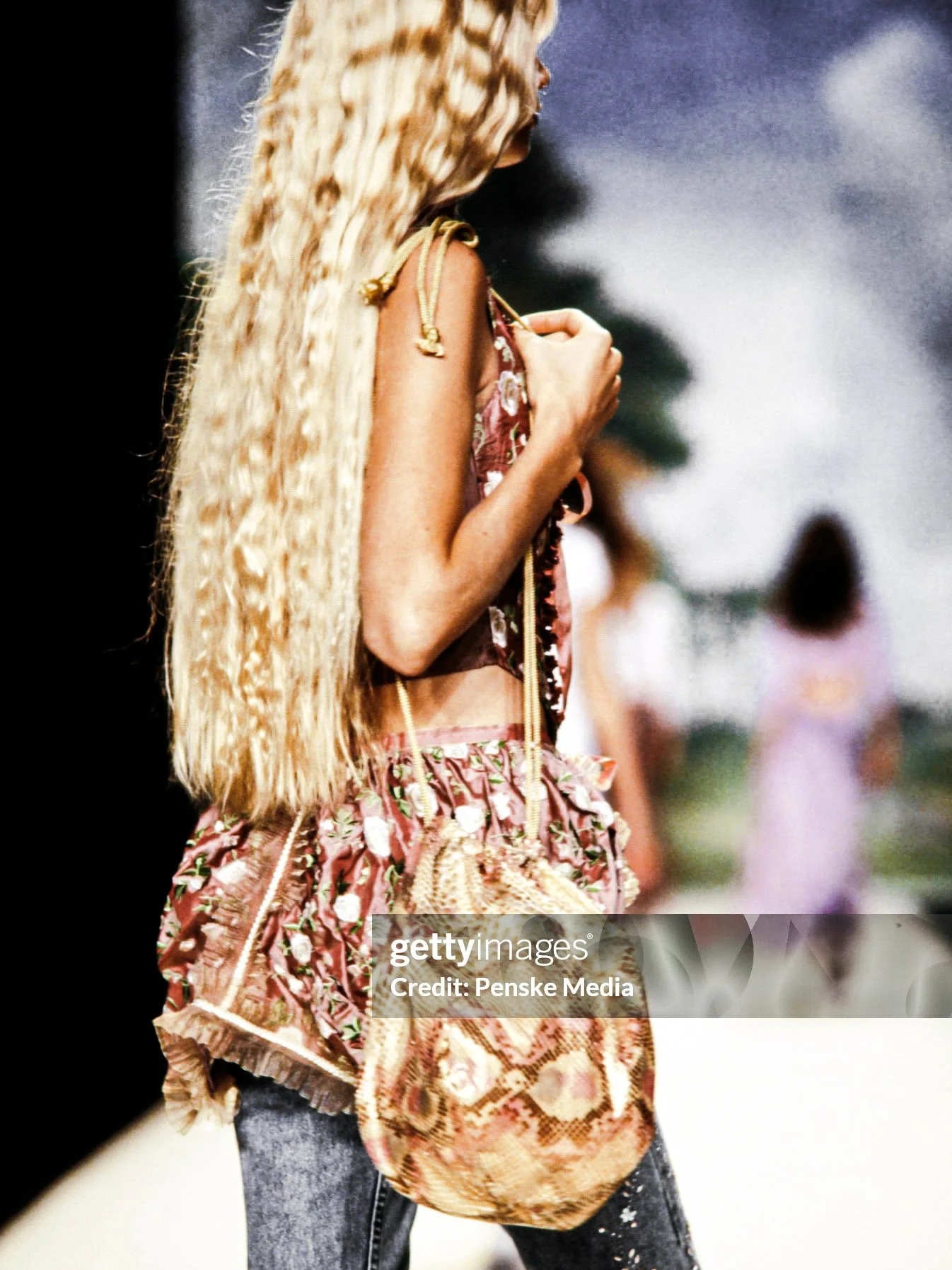
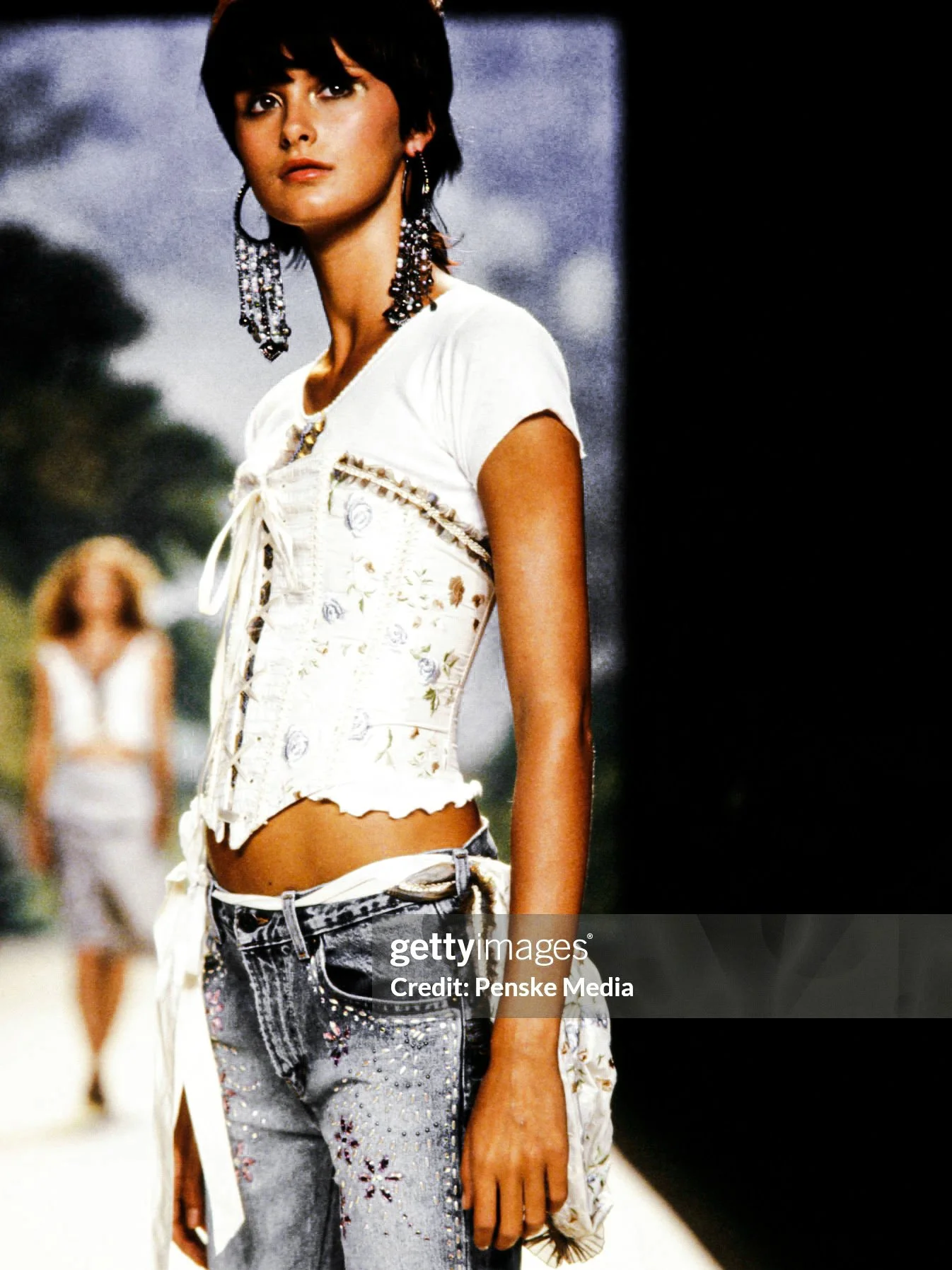
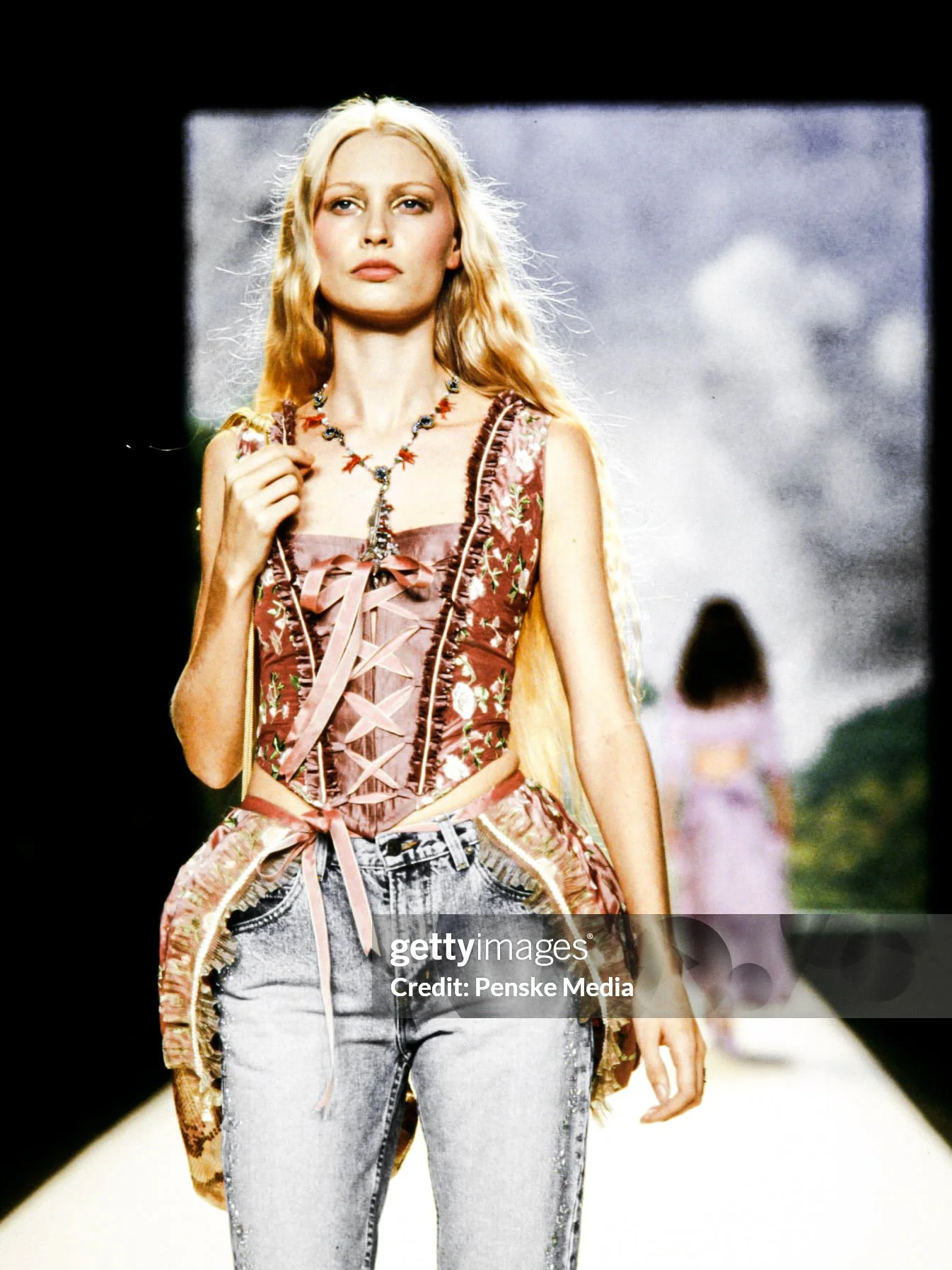
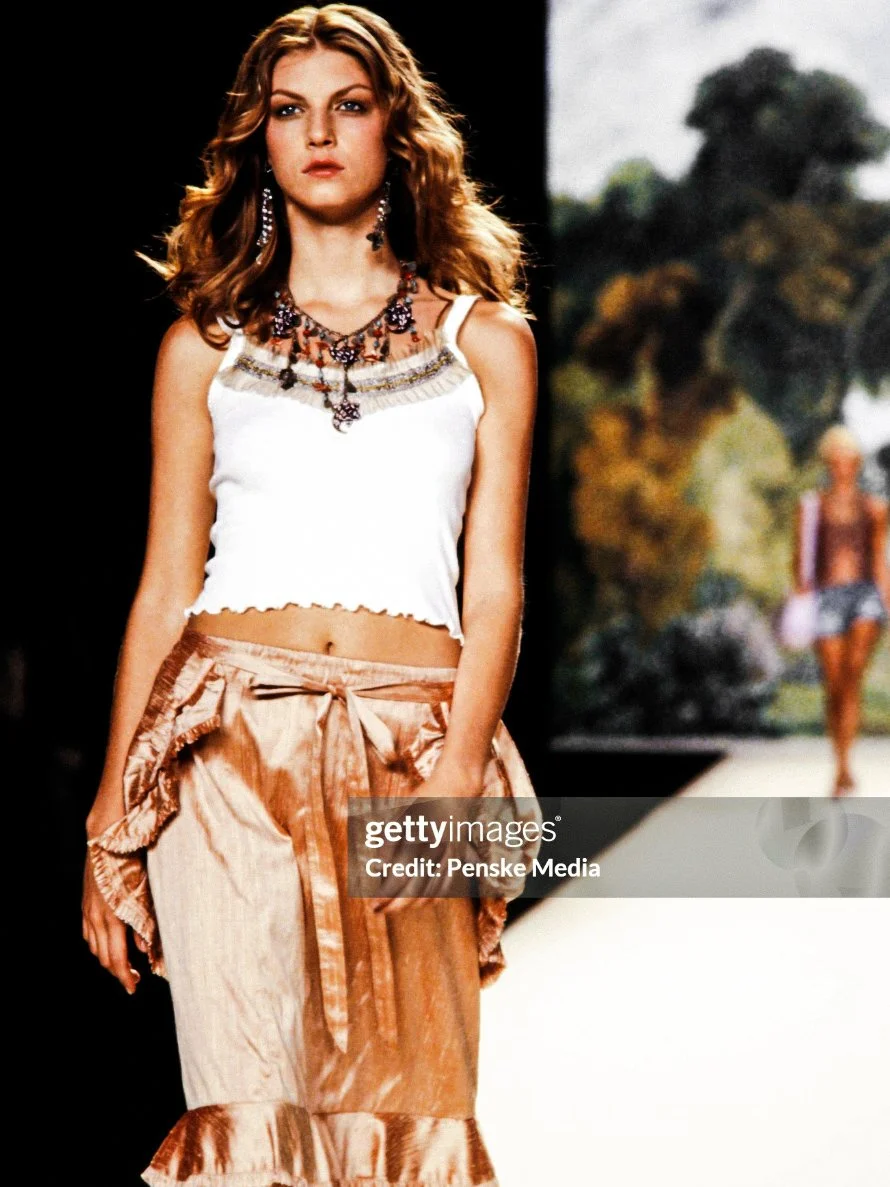
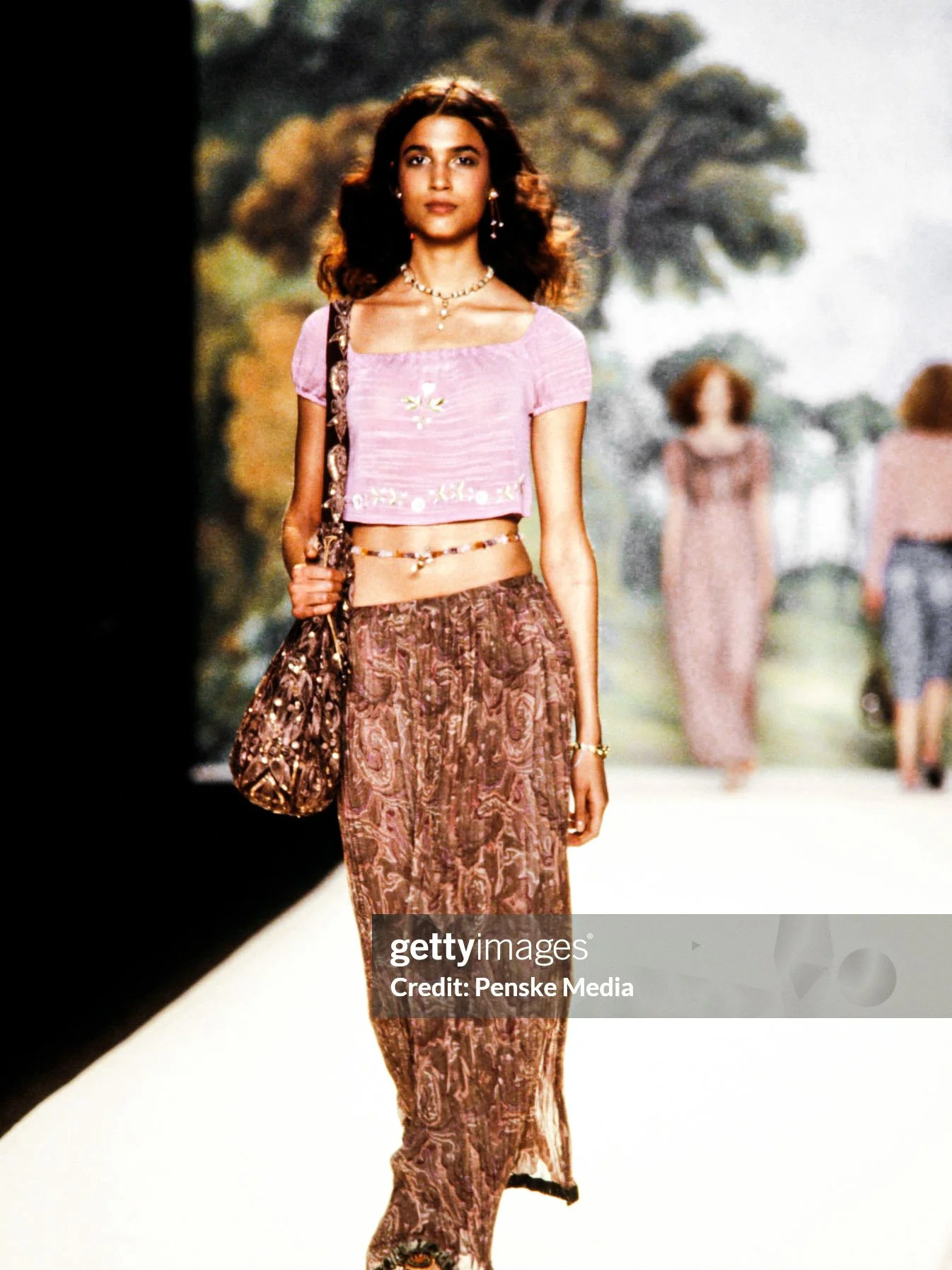
Anna Sui Spring (2000)
In its simplest form, media is an escape. Our curated algorithms are a reflection of ourselves, delivering the patterns and pleasures we respond to. In a world glutted with insecurity and global panic, it’s no wonder we face a unified urge to flee to the whimsy. No more was it a surprise that during pandemic-struck isolation, fairy fantasy novels found their way into an innumerable number of palms and ebook libraries (even if most refuse to admit this).
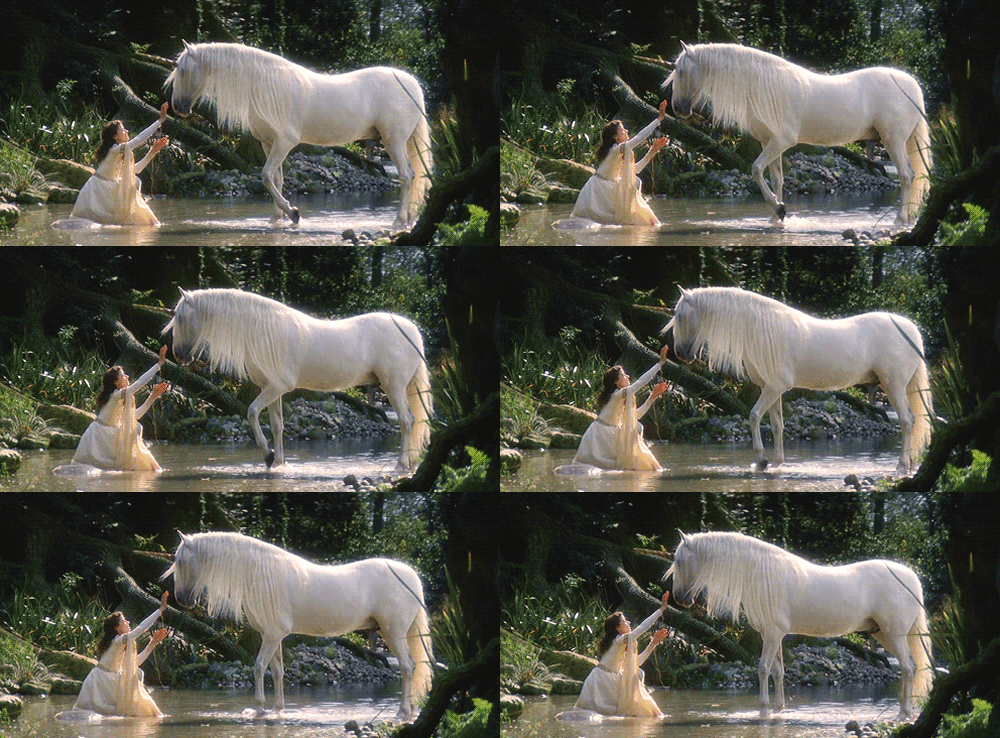
Legend (1985)
We are finding our algorithms charged with narratives of ‘happily ever after’, as seen through the glittering lens of the 2000s, campy romances where the unknown is battled with bravery and magic. A place where, in the spirit of Ella Enchanted, we might conquer our challenges as Arthurian heroines draped in cloaks, silver and braids, before a closing number of ‘Don’t Go Breaking My Heart’. This particular breed of ‘hopecore’ tempts us to return to the charmed and exaggerated world of Y2K medievalism. A little less reflective of an obsession with the historical, but very telling of our desire to inhabit a dreamier present. A medieval bowl cut is something I may leave in the past, but if social media is any indication, we might find a small pleasure in dusting off our childhood Shrek dvds or braiding a velvet ribbon into our hair.